The Hidden Network Behind School Board Battles- Part 2
Part 2: How the New Jersey Family Policy Center and Similar Organizations Influence Schools and Policy.

In Part 1 of this series, we examined the role of the New Jersey Family Policy Center and its connection to a broader national network of faith-based political advocacy organizations. Understanding who these groups are is only the first step.
The next question is how they actually influence public education policy and local school decisions across New Jersey. The answer is that the strategy operates on several levels at once: legislation, local school boards, public messaging and if all else fails, threats of lawsuit.
Influence in Trenton
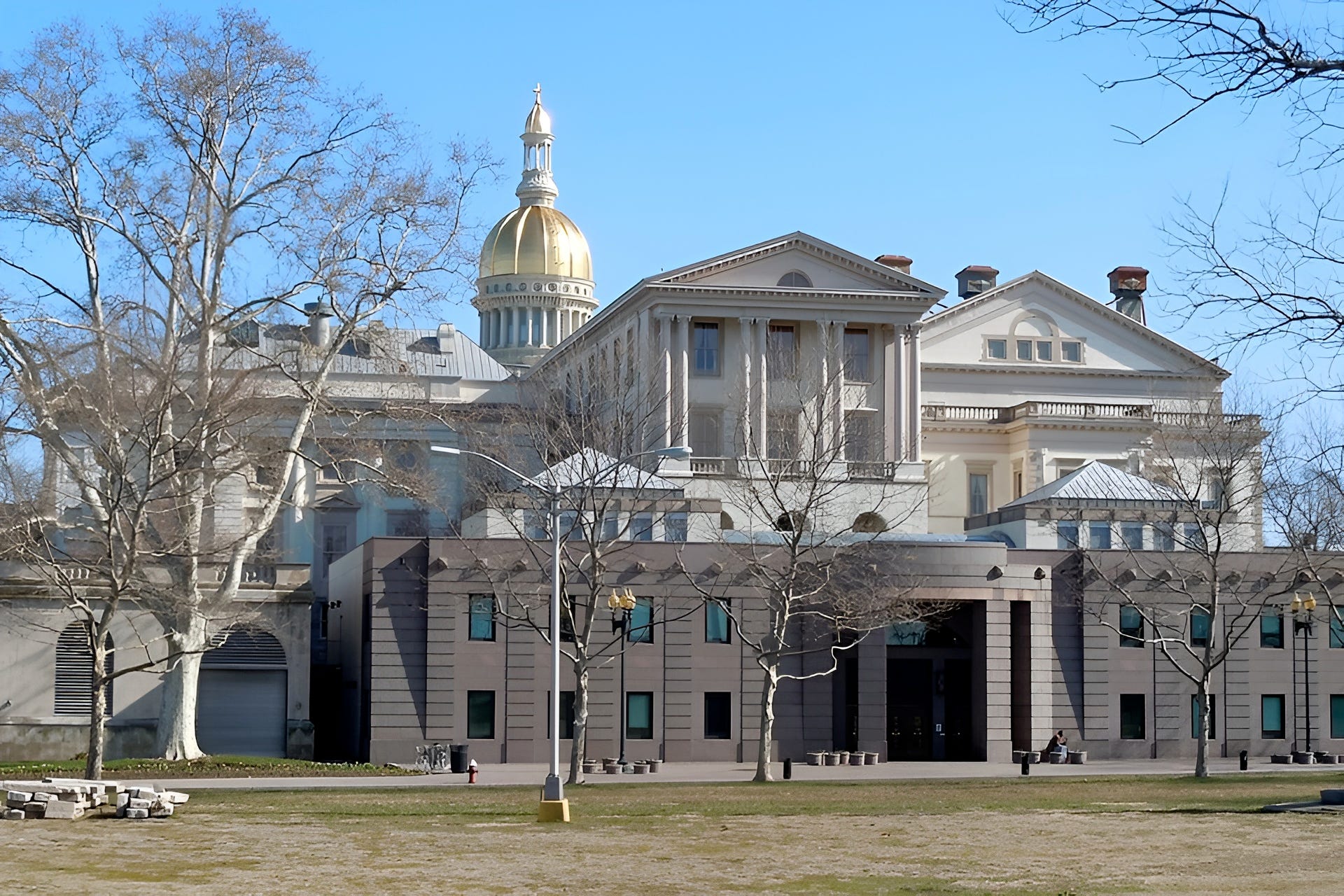
One of the primary arenas where organizations like the New Jersey Family Policy Center operate is the state legislature. Like many advocacy organizations, they track bills, testify at legislative hearings, and encourage supporters to contact lawmakers. Through policy alerts, email campaigns, and social media, they mobilize supporters to weigh in on issues involving:
• school curriculum standards
• parental notification policies
• sex education requirements
• religious liberty legislation
• school choice and voucher proposals
They also appear at hearings before the New Jersey State Board of Education in attempts influence the updates of New Jersey Student Learning Standards.
The organization also works within a larger national advocacy structure linked to the Family Policy Alliance, which provides strategic support, messaging guidance, and policy templates that can be introduced in state legislatures across the country.
This type of coordinated policy development is common in modern advocacy movements and allows organizations to replicate similar legislative strategies in multiple states.
The Local School Board Strategy
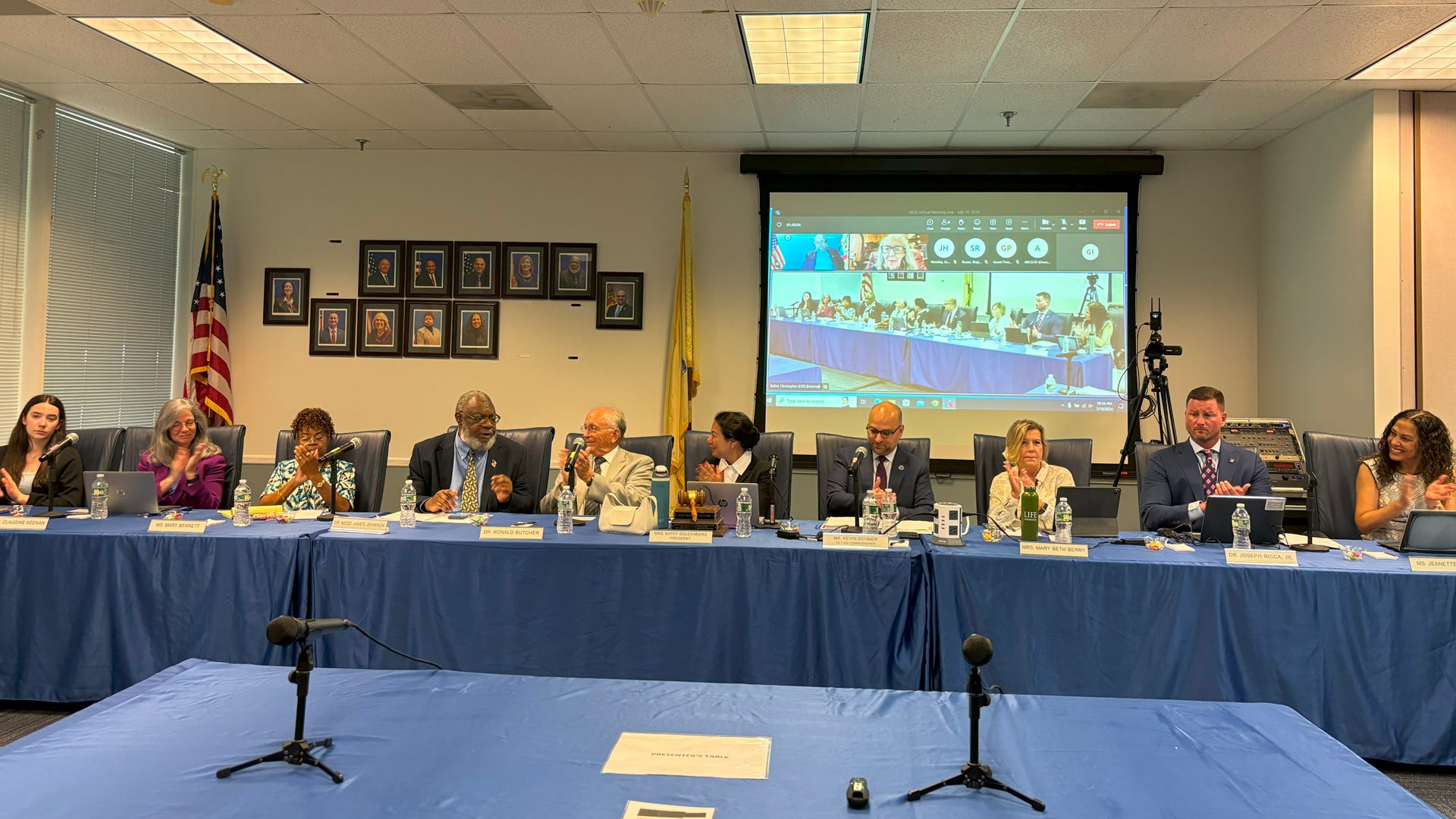
If state legislation is one front in the battle over education policy, local school boards are another.
In recent years, school board meetings across New Jersey — as well as across the United States — have become focal points for debates about curriculum, library materials, gender identity policies, and parental notification rules. Advocacy groups often encourage supporters to attend meetings, speak during public comment periods, and organize locally around these issues. In some cases, activists also run for school board seats themselves.
School boards may appear to be small local bodies, but they play an important role in determining how state standards are implemented in classrooms.
By influencing local boards, advocacy groups can shape policies on:
• library book challenges
• student privacy policies
• parental notification rules
• interpretation of curriculum guidelines
• teacher training and classroom materials
For organizations seeking cultural change in education, school boards represent an accessible and powerful entry point.
Messaging and the Power of Language
Another key component of modern advocacy is messaging. Terms such as “parental rights,” “religious freedom,” and “protecting children” are powerful rhetorical tools. They appeal to widely shared values and can unite people who might otherwise disagree on policy details.
Critics argue that these phrases can sometimes obscure deeper ideological goals.
For example, policies framed as protecting parental rights may have broader implications for how schools handle sensitive issues such as gender identity, sexual orientation, or religious expression. Supporters, on the other hand, argue that these policies simply restore authority to families and protect religious beliefs from government intrusion.
Of further note is the fact that while demanding parents rights in our public schools, many of the same organizations and advocates are in favor of school vouchers which take public tax money away from our public schools and divert it to private and religious schools. So there is an inconsistency in their claim that they support public education and want to increase parents involvement in public schools, while at the same time supporting voucher programs that take money out of the public school system, which weakens the system as a whole.
Further, one must understand that when the messaging is about parental rights, it general only includes the rights of parents who agree with the rhetoric and the rights of those parents who do not are dismissed. As a result, major portions of parents who believe their values are being protected by parents rights advocates find, that in fact, they are not being protected.
Disinformation and Fear Campaigns
Another key component of the advocacy campaigns of these organizations is disinformation designed to foster support.
For example, in 2020, the New Jersey Student Learning Standards for Health and Physical Fitness NJSLS-HPF) were updated to provide students with information to keep them safe.
In part, the standards required information such as teaching kindergarten through second grade students the actual anatomical names of their bodies so that if they were being sexually abused, they would have the necessary language to describe it. Further, it provided older grades with information about the different types of sex and which could result in pregnancy and sexually transmitted diseases while still emphasizing abstinence first and the right to say no. That part of the standard was to promote student safety.
The gender identity parts of the standards are designed to promoting respect and inclusion. To help students recognize and respect differences among individuals, including gender identity and gender expression, along with race, religion, disability, and other characteristics. The standards state that social health includes the ability to interact with others while accepting differences and fostering inclusive environments.
Further, the standards outline learning goals at different grade levels. For example:
Elementary levels: Students learn that people have different interests, families, and ways of expressing themselves.
Middle school: Students learn about respectful relationships and inclusive communities.
High school: Students analyze factors affecting identity, relationships, and decision-making about health.
The intent is that instruction becomes more complex as students mature.
However, in order to create shock and fear in parents who are not fully informed on the subject, parental rights groups and religious advocates falsely claimed that the new standards were “sexualizing” children and preparing them for the sex trafficking industry. Further, they claimed that the majority of parents in New Jersey were opting their children out of the curriculum.
In response to the opt-out claim, the New Jersey Public Education Coalition (NJPEC) sponsored a study with the help of students from a national law school to address the validity of these claims.
Called the “OPRA Project,” a document request was sent to every public school district in the State of New Jersey, in accordance with the New Jersey Open Public Records Act (OPRA), asking for their total student enrollment and the number of students whose parents opted them out of new curriculum. Within a high degree of statistical reliability, it was determined that less than 3% of parents statewide had opted their children out the curriculum established as a result of the new student learning standards.
Regardless of the fabrication, the effectiveness of these movements often lies in their ability to frame complex policy debates in emotionally resonant language. It also served as a strategy to create unjustified outrage to get those who are deceived to run for Board of Education based upon misrepresentations of fact. The exact effect the strategy was designed to create.
If Lies Don’t Work, Threaten Lawsuits.
The Thomas More Society, a national conservative Christian legal organization, is increasingly resorting to legal threats in an effort to pressure local school districts to roll back protections for transgender and other marginalized students communities.
In the Westwood New Jersey Regional School District, a former Board of Education, controlled by activists, rescinded a policy designed to protect the privacy rights and the safety of transgender students. Subsequently, a newly elected Board of Education chose to reinstate the policy, recognizing that it was necessary to ensure compliance with the New Jersey Law Against Discrimination, other protections and policies issued by the New Jersey Department of Education, and to provide students with a skills needed to interact and work with people of all different backgrounds, once they entered the workplace

Activists who were unable to persuade the new Board of Education to once again rescind the policy through the normal public process, have turned instead to outside legal intervention. The well-funded Thomas More Society is more than happy to intercede into should be local governance and sent a letter to the Board of Education threatening lawsuit if the policy is not rescinded once again.
But they went even further by indicating that the same letter would be sent out to every public school district in the state that still had the policy in place. Effectively, the Thomas More Society is trying to impose their national agenda on every public school district in the State of New Jersey using a network of local activists.
It is obvious that they intend to use Westwood as a test case resulting in what will be a huge expense to the district to defend and which will take taxpayer dollars that should be educating students and diverting it to legal defense fees.
The strategy reflects a broader national campaign in which advocacy groups seek to intimidate school boards with the prospect of costly litigation, even where local policy complies with existing state guidance. This allows the loud minority of religious activist to hold a district hostage and attempt to force application of their particular religious and ideological values while they bear no personal cost. State and national organizations with absolutely no connection to the local school district foot the bill in order to pursue their constitutional claims which are at best, questionable.
Supporters of these challenges frequently point to recent decisions of the Supreme Court of the United States—including cases such as Mahmoud and Mirabelli—as justification for threatening lawsuits. But those rulings may have limited relevance in New Jersey, where state law and policies adopted by the New Jersey Department of Education explicitly recognize and protect the rights of transgender students in public schools.
By invoking these cases despite the different legal framework governing New Jersey schools, critics argue that the effort is less about clarifying the law and more about using legal pressure to force policy changes that could not be achieved through local democratic decision-making.
Why This Matters for Public Education
Public schools in the United States operate under constitutional principles requiring government neutrality toward religion. At the same time, schools must respond to the concerns of parents and communities with diverse beliefs and values. This balance has always been delicate.
Advocacy organizations on many sides of the political spectrum seek to influence how that balance is struck. The New Jersey Family Policy Center represents one voice in that ongoing debate.
Understanding how these organizations operate — from Trenton to local school boards — helps the public better evaluate the policies and arguments being presented.
Because in the end, debates about curriculum, parental authority, and religious freedom are not just policy questions. They are also questions about what kind of public education system New Jersey wants for its future and whether real local values are being promoted.
________________________________________
Part 3 will examine the funding, leadership networks, and political alliances that support advocacy organizations involved in shaping education policy in New Jersey.
________________________________________
Please continue to support the work done by the New Jersey Public Education Coalition (NJPEC) by donating to our GoFundMe or becoming a paid subscriber to this blog.